- Photos in this story are copyrighted by Calvin Nickels. All rights reserved.
FROM PAPER TO POETRY: THE TRUE UGLY DUCKLING
The Hidden Life of Hans Christian Andersen—Reimagined in Paper by Calvin Nicholls
In Denmark, before Hans Christian Andersen ever wrote a single story line that would endure for centuries, he carried something far simpler—and far more revealing.
A pair of oversized scissors.
He carried them everywhere.
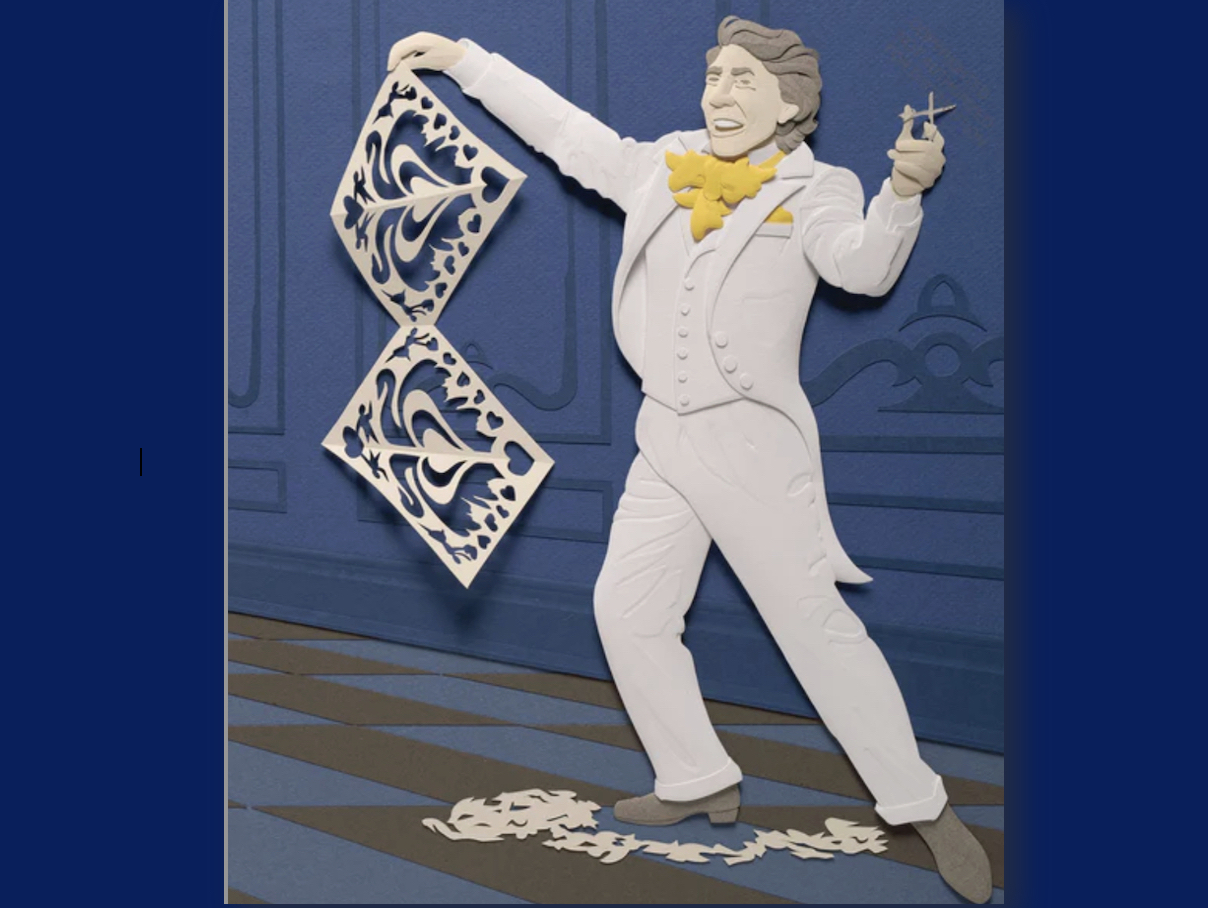
Into parlors. Into salons. Into the homes of strangers and patrons alike—anywhere an audience might gather. And when they did, Andersen did not simply entertain.
He performed.
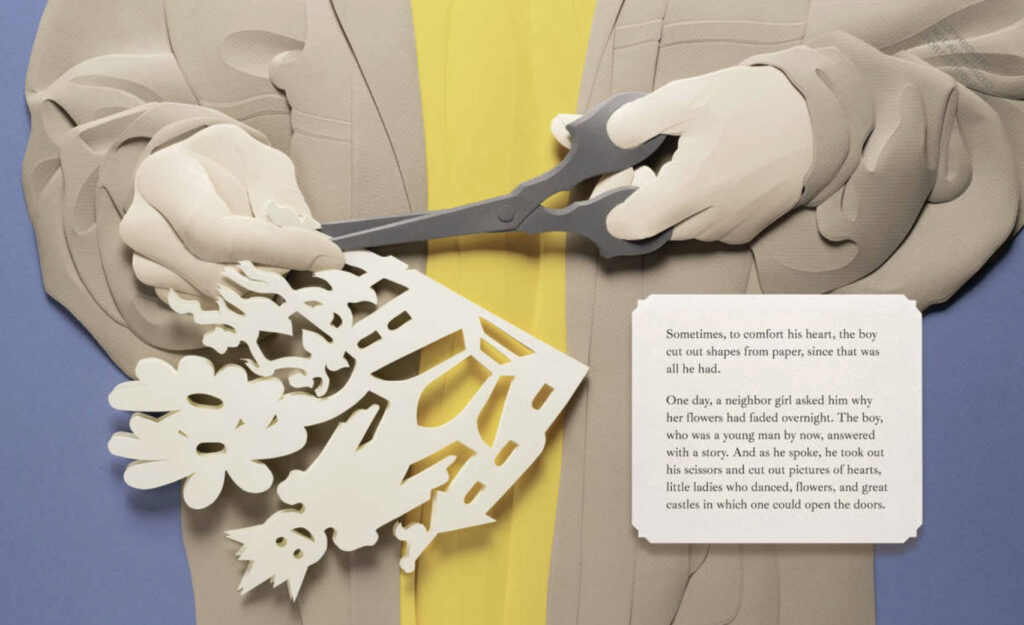
As he spoke—often spinning whimsical, improvised tales—his hands moved with quiet precision. Paper folded. Scissors glided. Figures emerged without sketch or hesitation. His listeners—often children, but just as frequently adults in cultured drawing rooms—leaned forward in anticipation.
And then, at the perfect moment, he would stop.
Unfold the paper.
And reveal an entire world.
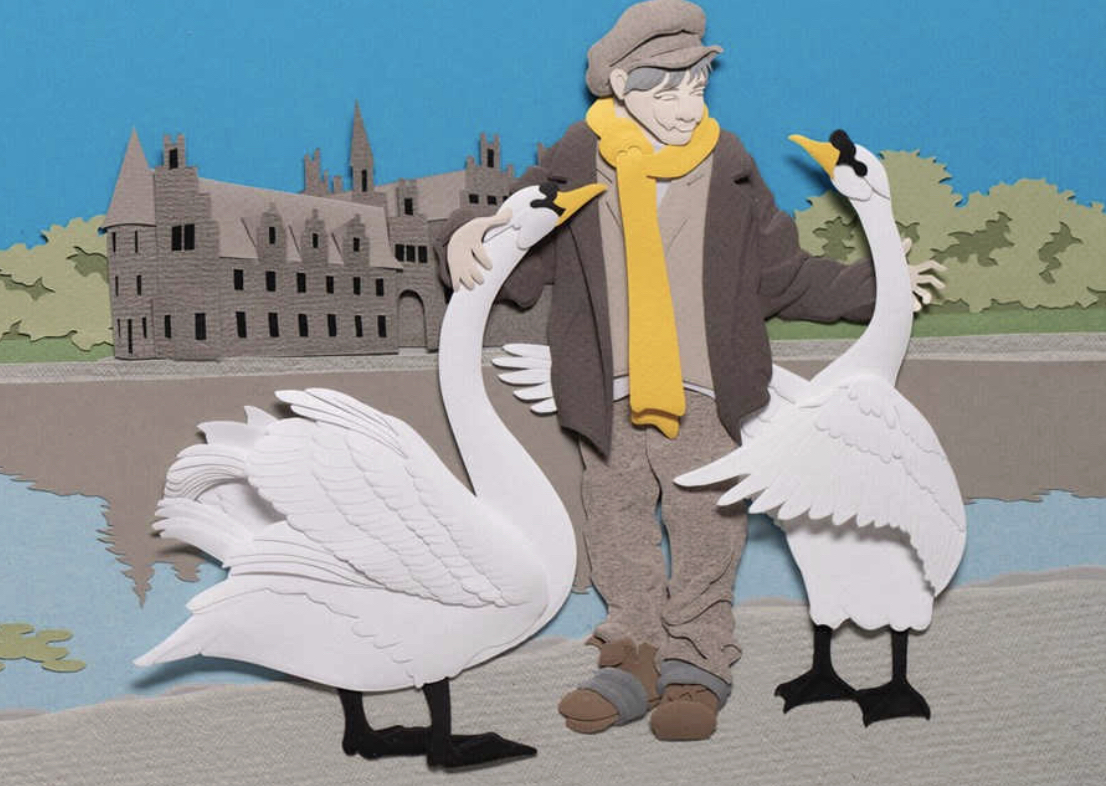
Swans. Dancers. Angels. Theatrical figures linked in delicate symmetry—an intricate visual narrative cut from a single sheet. The room would fall silent, then stir with astonishment. It was storytelling before ink. And for a boy who struggled to belong, it was his first language.
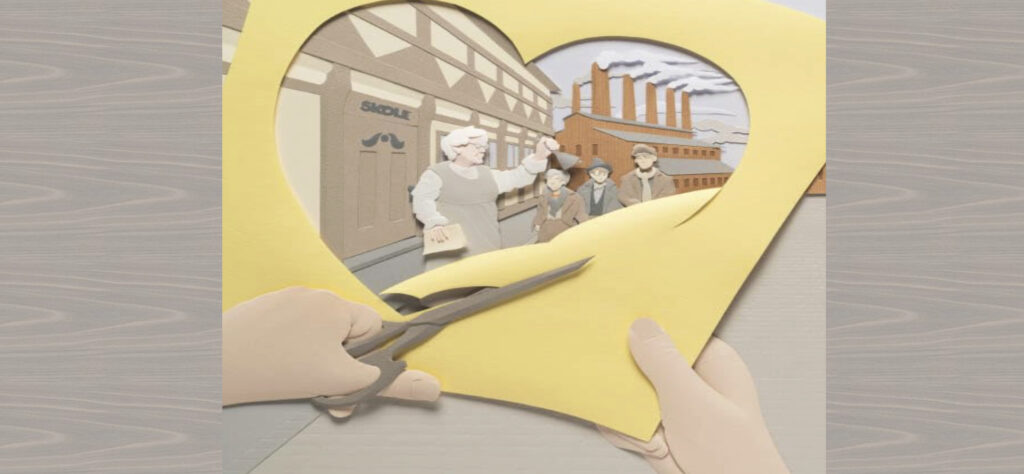
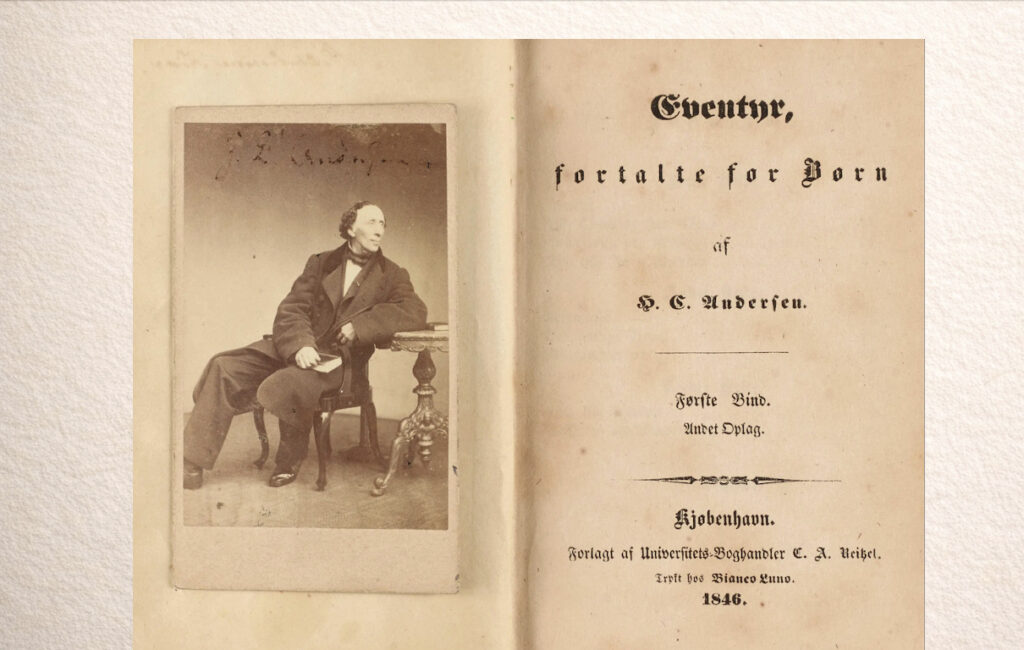
Born into extreme poverty as the son of a shoemaker and washerwoman, Andersen was an outsider from the start. Tall, awkward, and deeply sensitive, he struggled socially and was often rejected in his early pursuits as an actor – and student.
His father died when Hans was a young boy, forcing him to work rather than attend school. A director at the Royal Theater noticed his raw talent and arranged for him to enter grade school at the age of 17. His much younger classmates humiliated poor Hans, who longed for recognition.
So he created anyway.
Those paper-cut performances became his quiet entry into rooms that might otherwise have dismissed him. They were his way of captivating attention long enough to be remembered—long enough, perhaps, to be invited back.
But it was not until he turned to writing—drawing directly from his own sense of displacement—that something shifted.
When he published The Ugly Duckling in 1843 at the age of 38, the world believed it to be a charming fairy tale.
It was not.
It was autobiography.
A story of isolation. Of rejection. Of becoming. A reflection of a boy who felt different, who endured ridicule, and who held, somewhere deep within, the quiet certainty that he was meant for something more.
This time, the world listened.
His stories spread across Europe, then across continents. They were translated, celebrated, and cherished. Andersen was welcomed into aristocratic circles, admired by literary figures, and even hosted by the likes of Charles Dickens. The boy who once struggled for acceptance became a global literary sensation.
And yes—before his death in 1875, he knew.
He knew that the “duckling” had become the swan.
Nearly two centuries later, Andersen’s story returns in a profoundly personal new form.
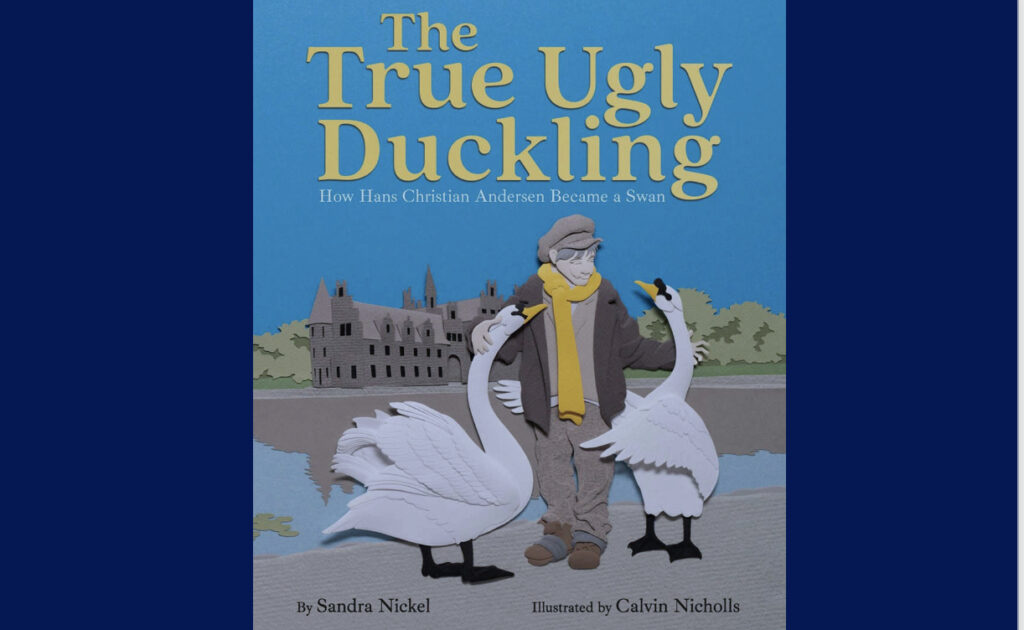
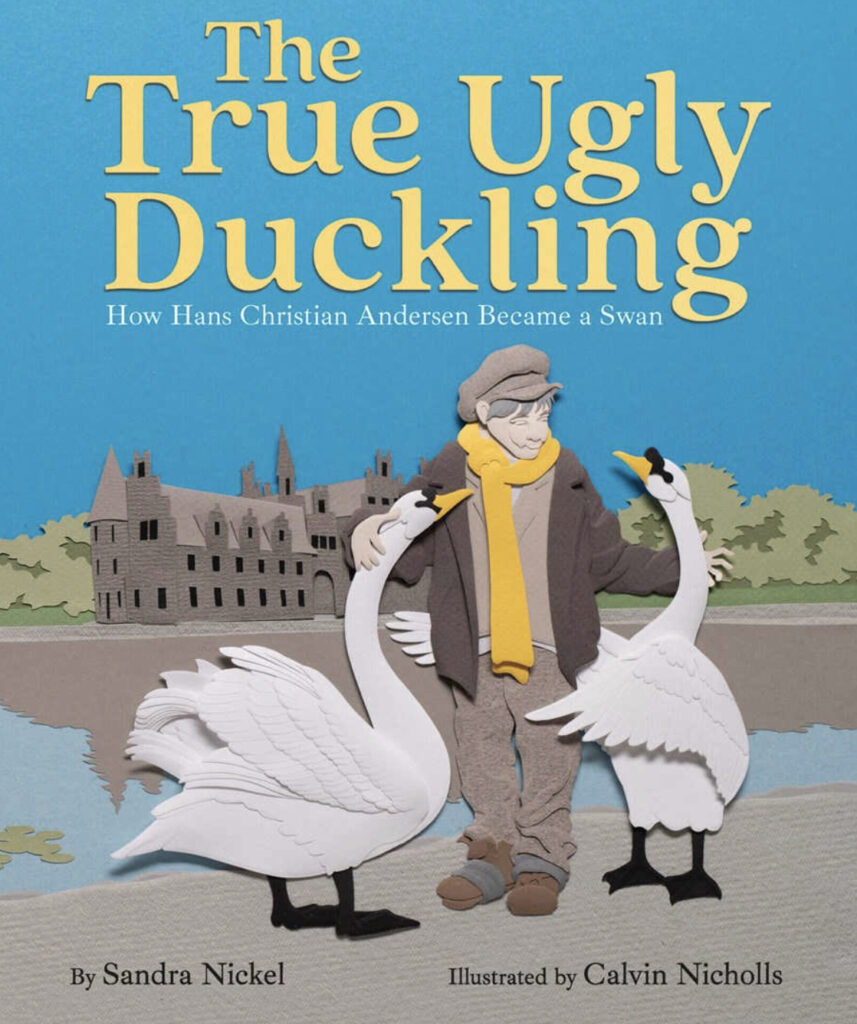
In The True Ugly Duckling – How Hans Christian Andersen Became a Swan, author Sandra Nickel reframes the tale not as fiction, but as truth. Her narrative follows the emotional arc of Andersen’s life—a boy who leaves home at fourteen, who dares to dream of the stage and is rejected, who clings to creativity as both refuge and identity.
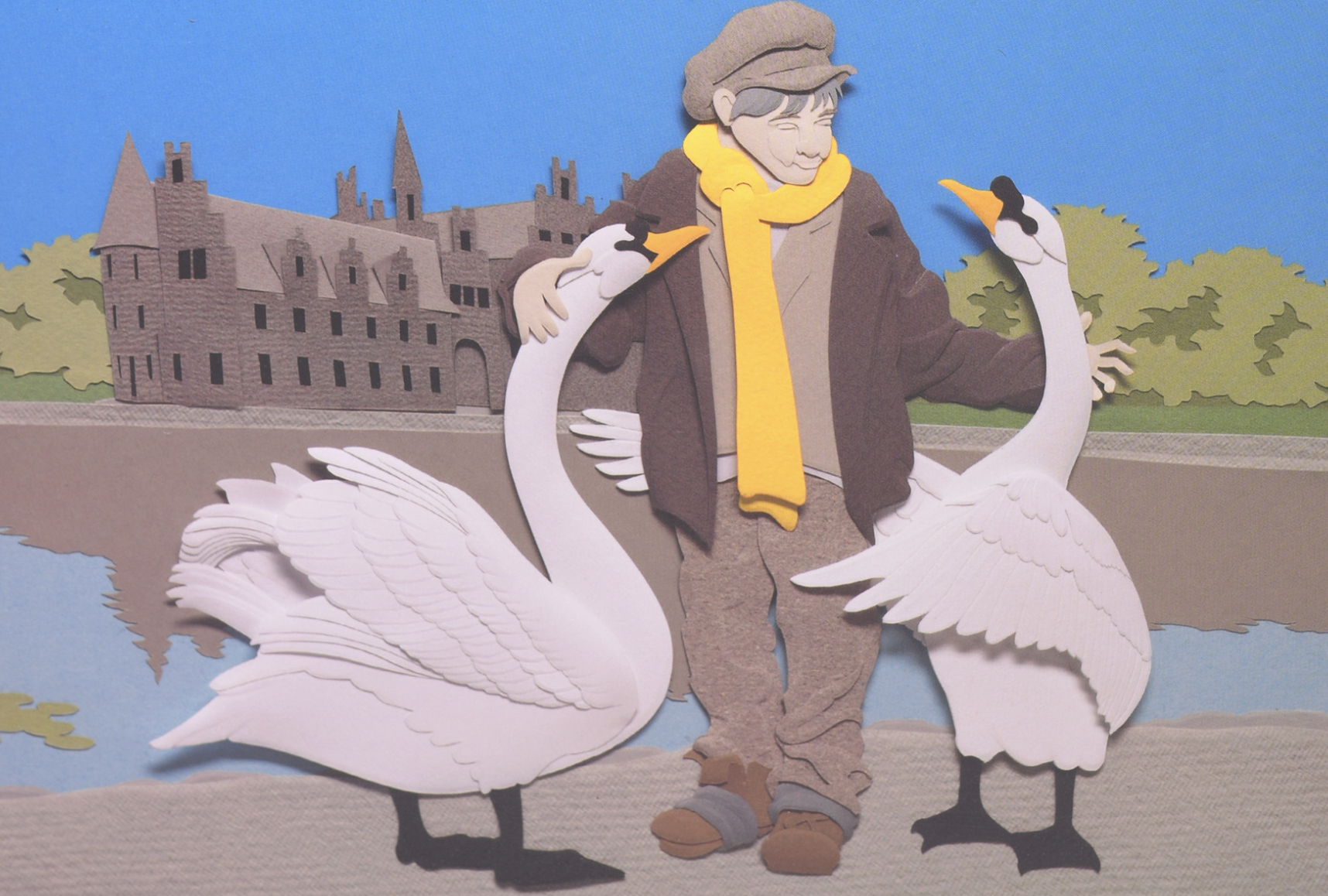
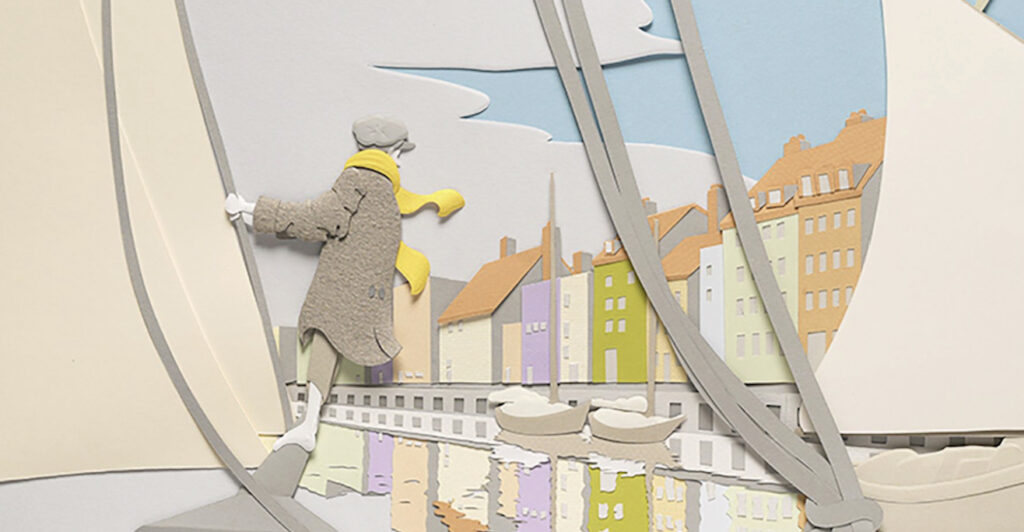
And in a poetic full-circle moment, the story is illustrated not with paint or ink—but with paper.
Enter Calvin Nicholls.
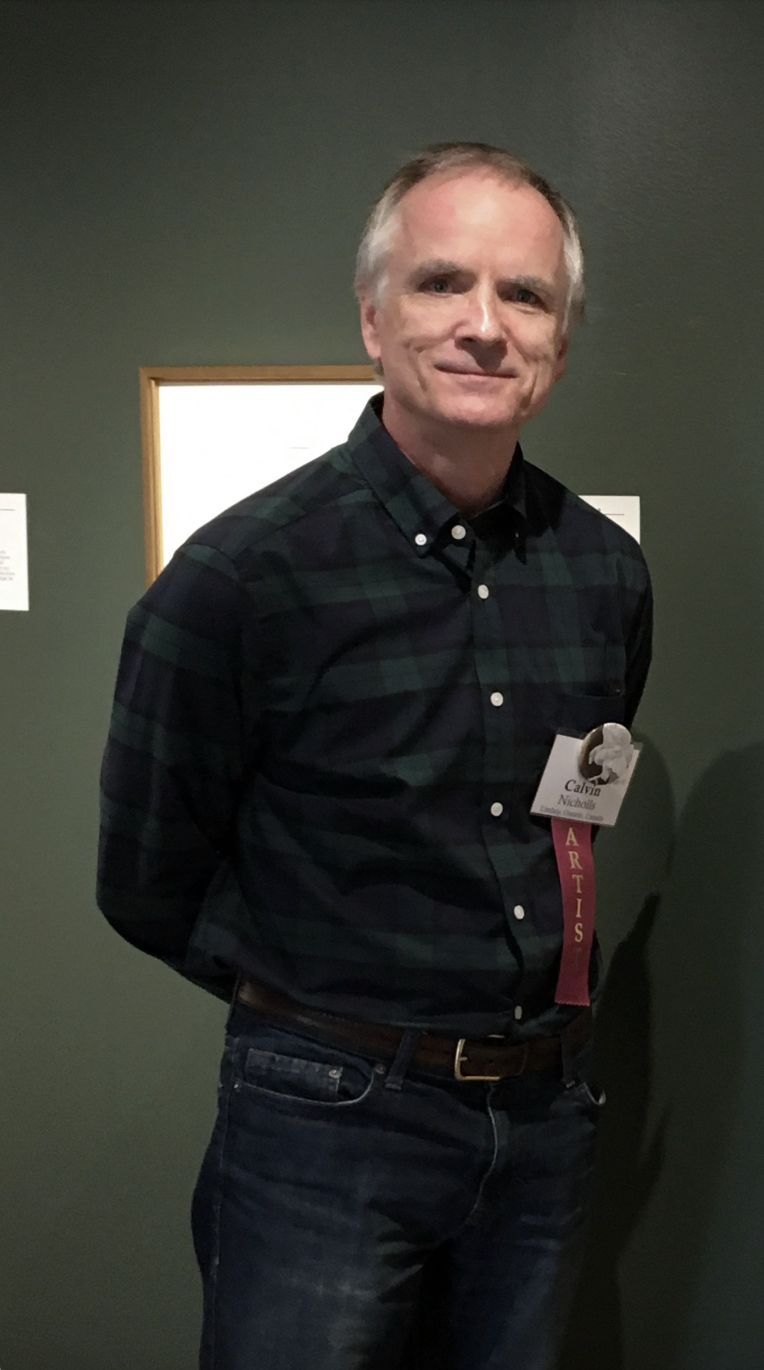
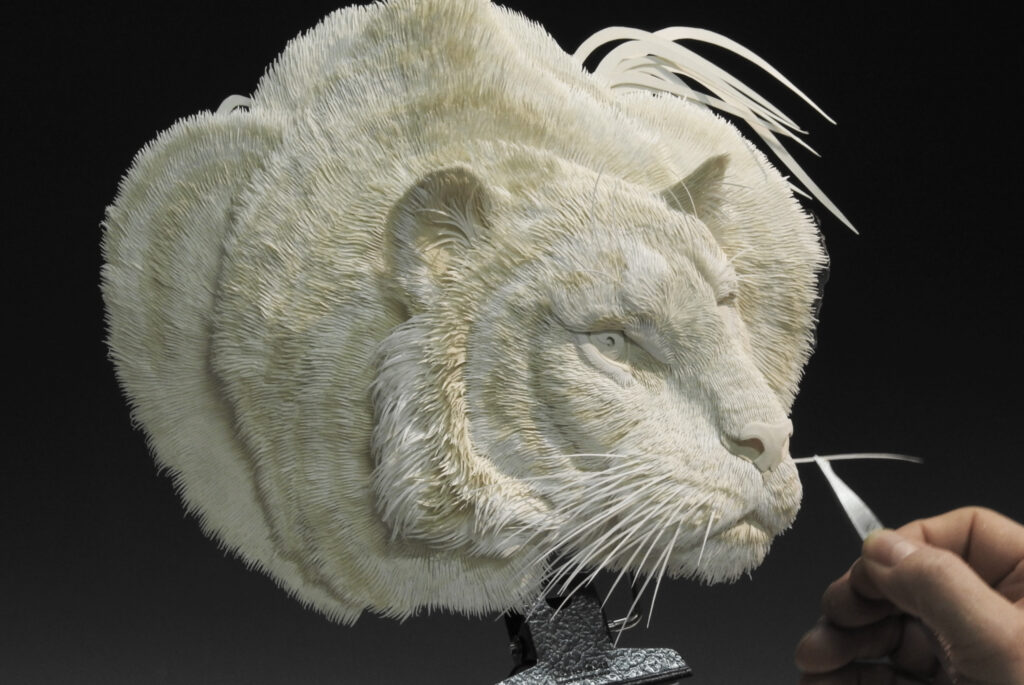
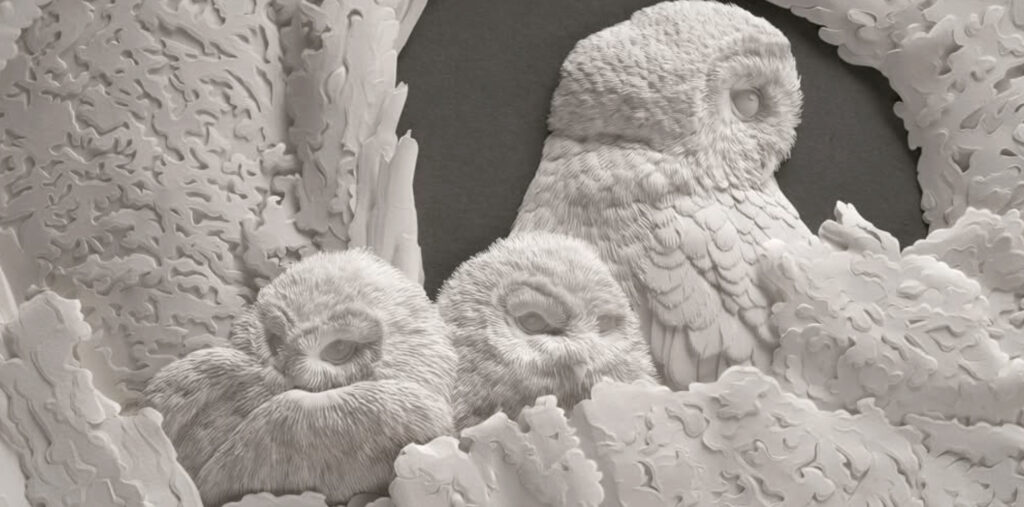
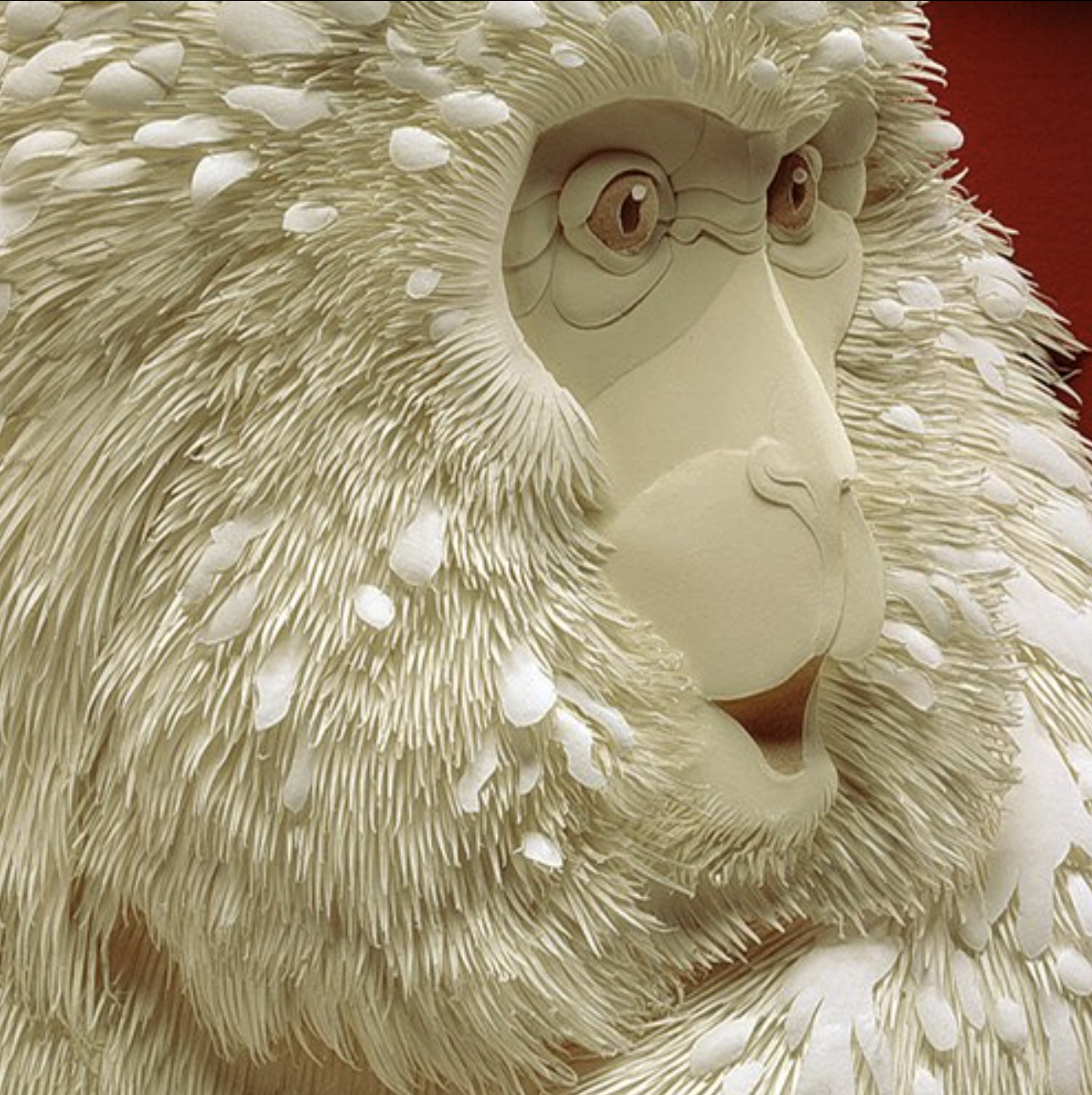
For decades, Calvin Nicholls has been celebrated for his extraordinary paper sculptures—wildlife rendered in luminous white relief, where feathers, fur, and form emerge through meticulous layering and the orchestration of light and shadow. His work exists at the intersection of sculpture, drawing, and photography, transforming an unassuming material into something profoundly alive.
When he first encountered Nickel’s manuscript, the realization was immediate—and overwhelming.
“Hans Christian Andersen—literary giant… Ugly Duckling author… He was a paper artist?!”
“I had to do it,” Nicholls recalls. “I must do it.”
What followed would become one of the most demanding undertakings of his career.
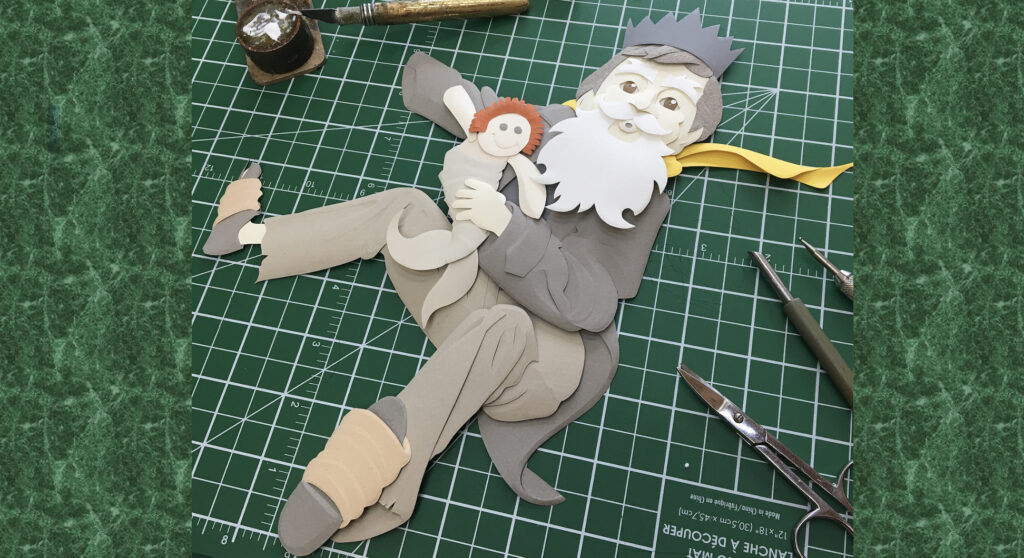
Traditionally known for his monochromatic palette—white on white, with subtle tonal variation—Nicholls was now tasked with creating a fully realized visual narrative for a children’s book. It required color. Emotion. Continuity. A new visual language.
He built that language from the ground up.
Over weeks, he sourced papers from across North America and Europe, experimenting with weights, textures, and hues until he developed a palette capable of carrying the story. The process extended into photography testing, compositional studies, and countless rough sketches refined in collaboration with the publisher and art director.
What began as an opportunity became an immersion.
Two years passed before the artwork was complete.
Inside Nicholls’ studio, time behaves differently.
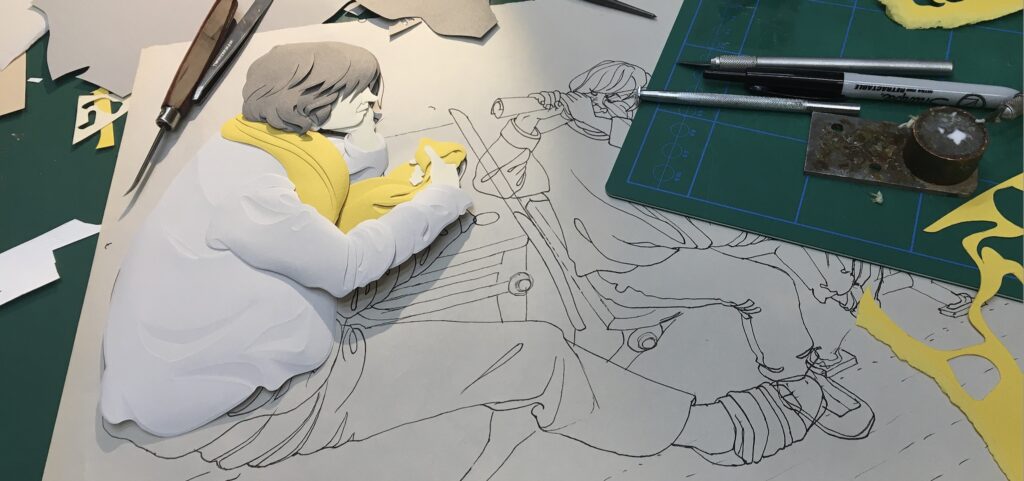
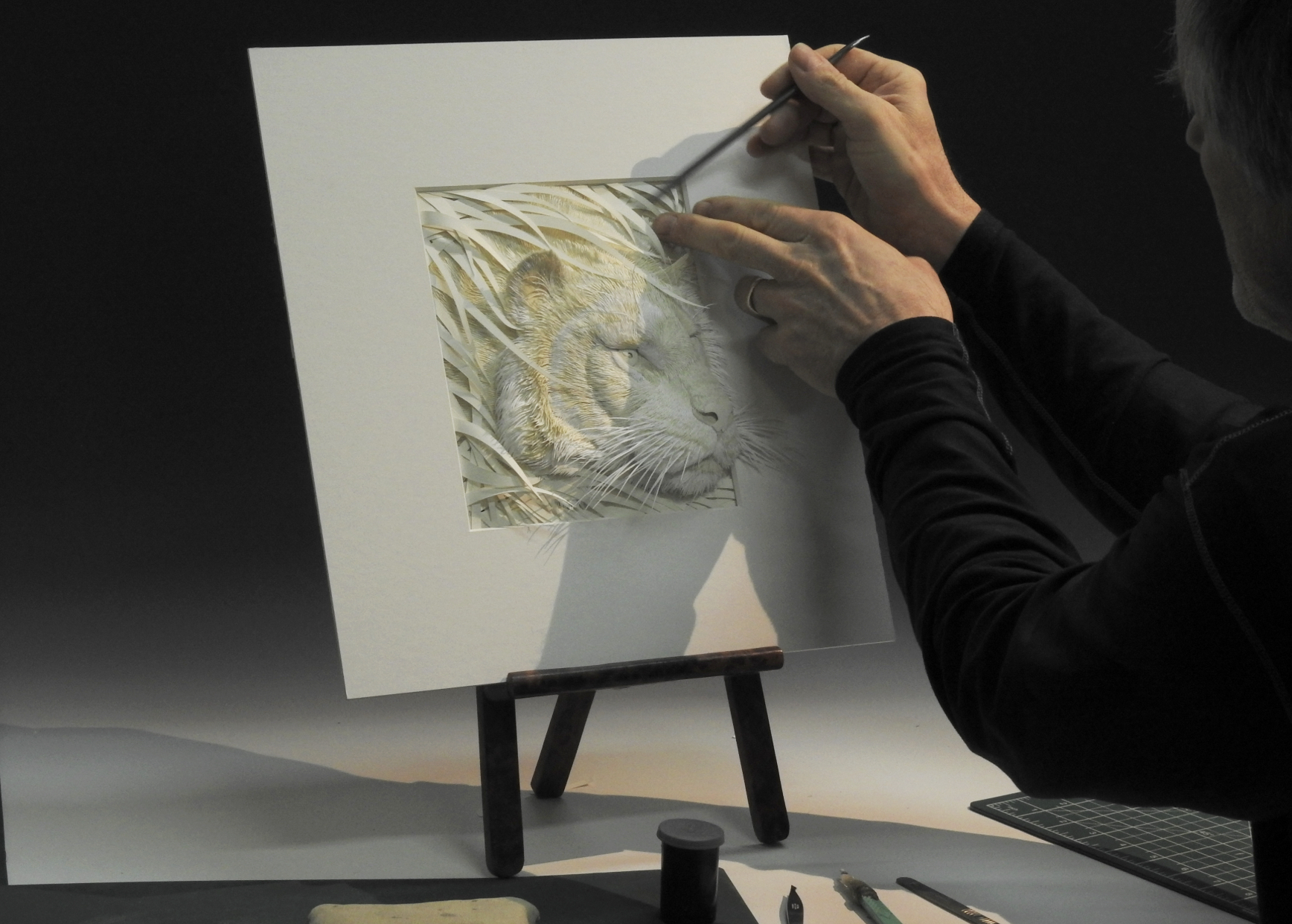
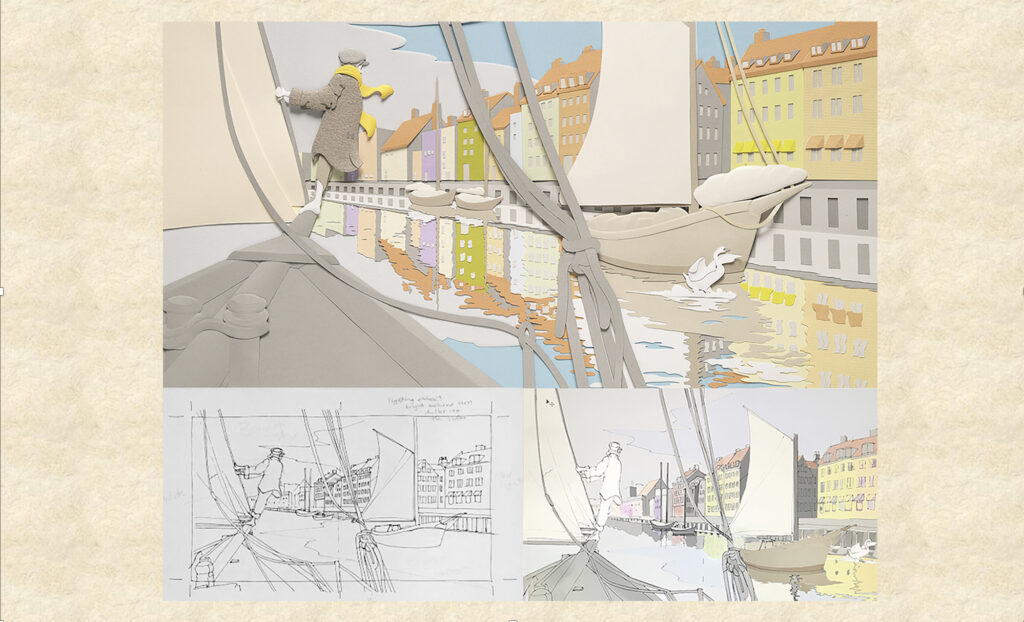
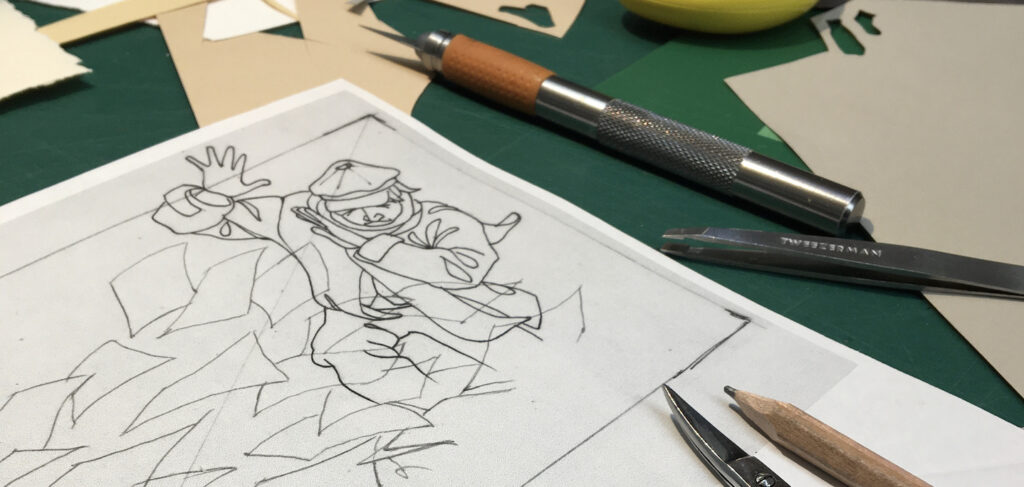
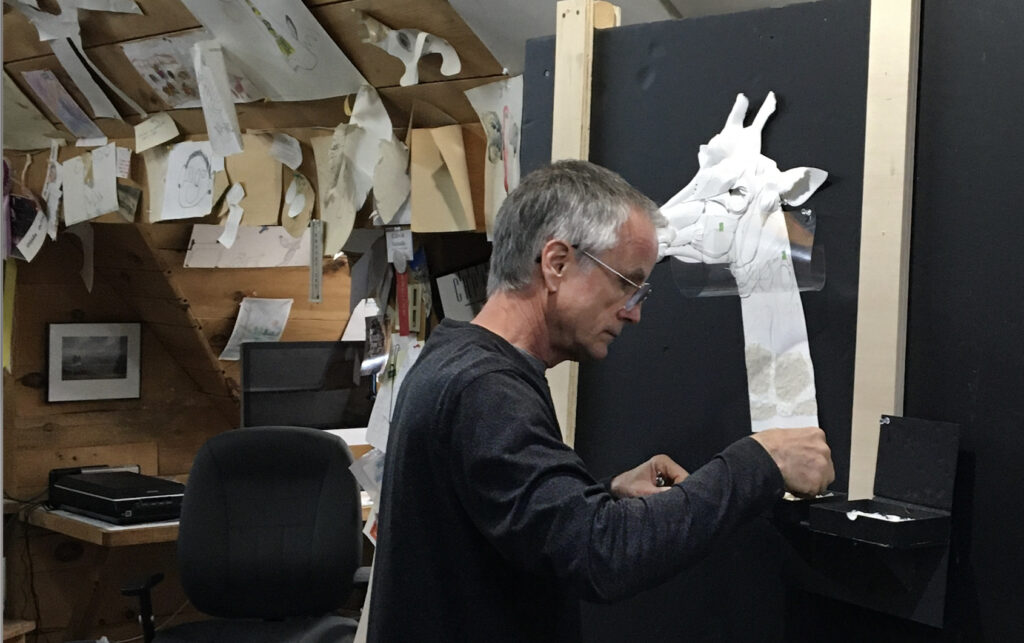
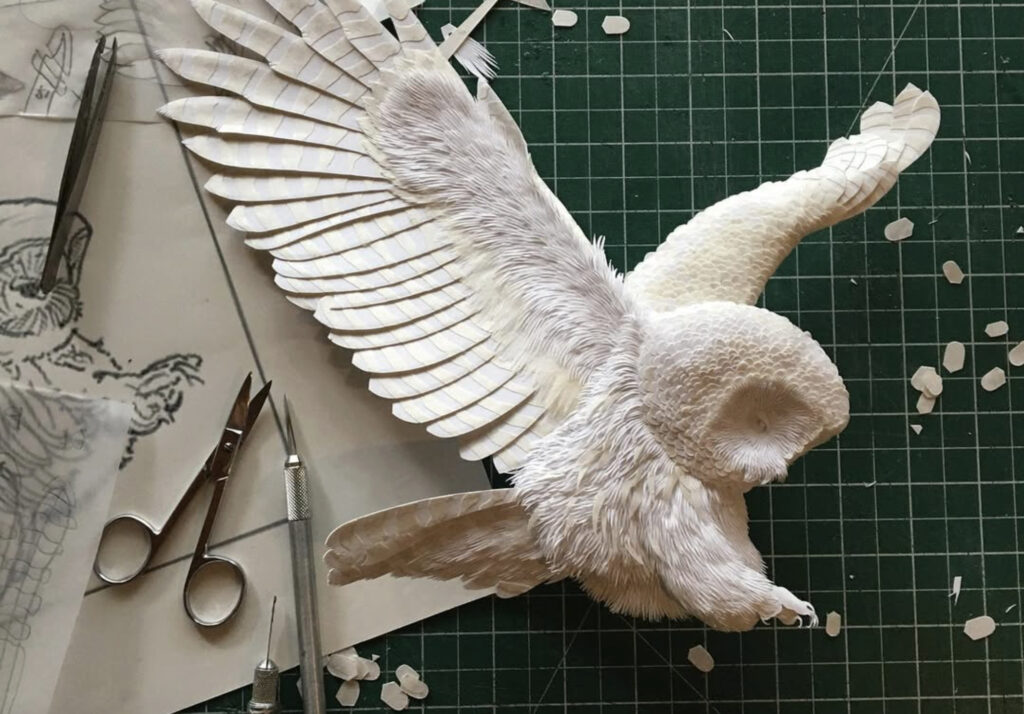
Each piece begins as a drawing—then is deconstructed into planes, much like a topographical map. Patterns are created, transferred, and cut. Layers are shaped and assembled into low-relief compositions, typically no more than an inch deep, yet rich with dimension.
If the drawing is precise, patterns may take less than a day. The cutting and sculpting may take several more. But it is the development—the thinking, the refining, the imagining—that consumes the greatest measure of time.
When the cutting begins, however, something shifts.
Music fills the studio. Focus deepens.
“There’s a rhythm,” he says. “A blissful hyper-focus… time absolutely disappears.”
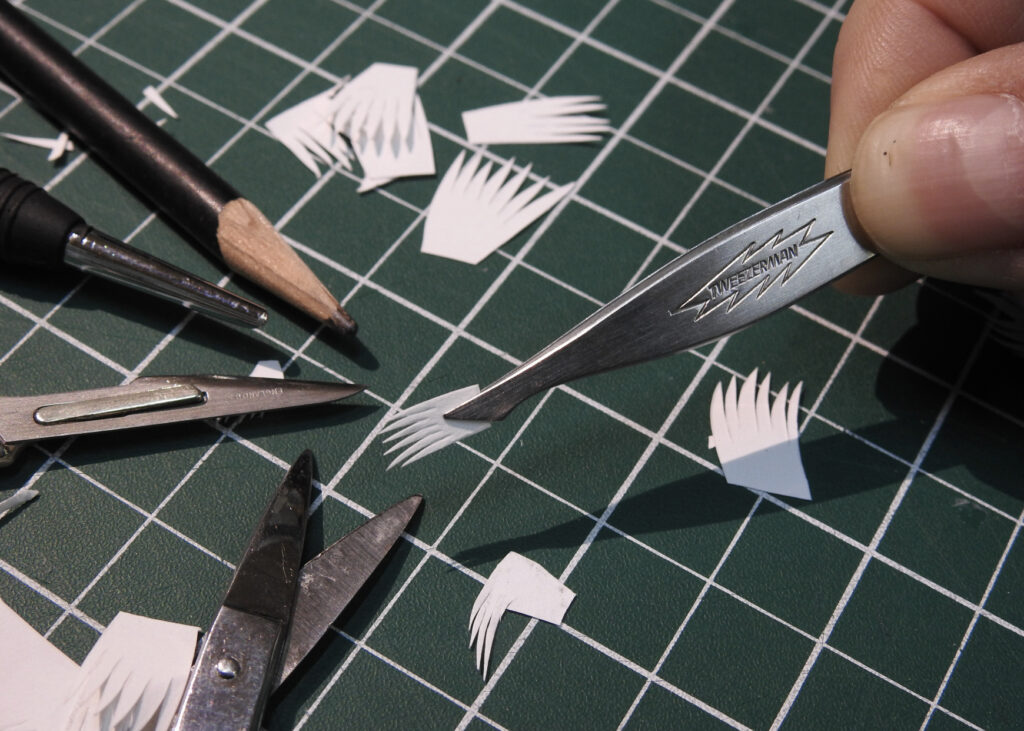
He works with surgical precision, using blades to define form and tools—some inherited from his mother’s leatherworking kit—to burnish edges and refine surfaces. Every decision is guided by light: how it will fall, where it will catch, how shadow will define the illusion of depth.
And then comes the moment he treasures most.
Bringing the finished work under studio lighting.
Seeing the interplay of highlight and shadow as the piece comes alive.
“That’s the reward,” he says.
Nicholls’ path to this rarefied craft was not guided by instruction.
There were no textbooks. No tutorials. No mentors willing to reveal technique. Early in his career, he encountered a paper artist whose work inspired him—but whose methods remained closely guarded. Nicholls was left to discover his own way, experimenting with tools, studying other artists, and reverse-engineering solutions to problems no one had documented.
Over time, he developed a discipline that merged multiple artistic traditions—graphic design, sculpture, photography—into a singular voice.
Wildlife became his defining subject.
Feathers, in particular, revealed something extraordinary: their structure, their rhythm, their interaction with light made them ideal for translation into paper. What began as experimentation evolved into mastery, and eventually into a career defined by one of the most specialized niches in contemporary art.
Today, few artists in the world work at this level within paper sculpture—fewer still within wildlife.
And yet, Nicholls built it all from the simplest premise.
“I make things out of paper,” Nicholls reflects.
For readers of Eloquence, his work carries a particular resonance.
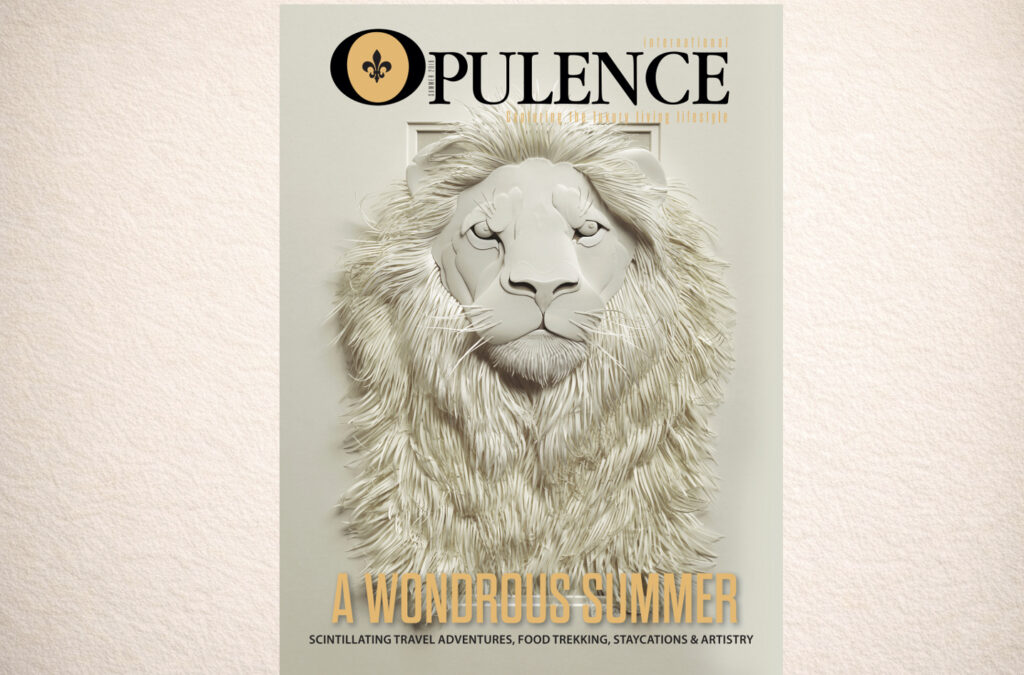
In 2016, his lion sculpture graced the cover of International Opulence, rendered in detailed and deeply embossed white silk paper, so dimensional it seemed to rise from the page. The response was immediate and powerful—a testament to the quiet drama of his medium.
Not long after, Nicholls received a commission that would bring his work into one of the world’s most visible stages – a New York City holiday window display.
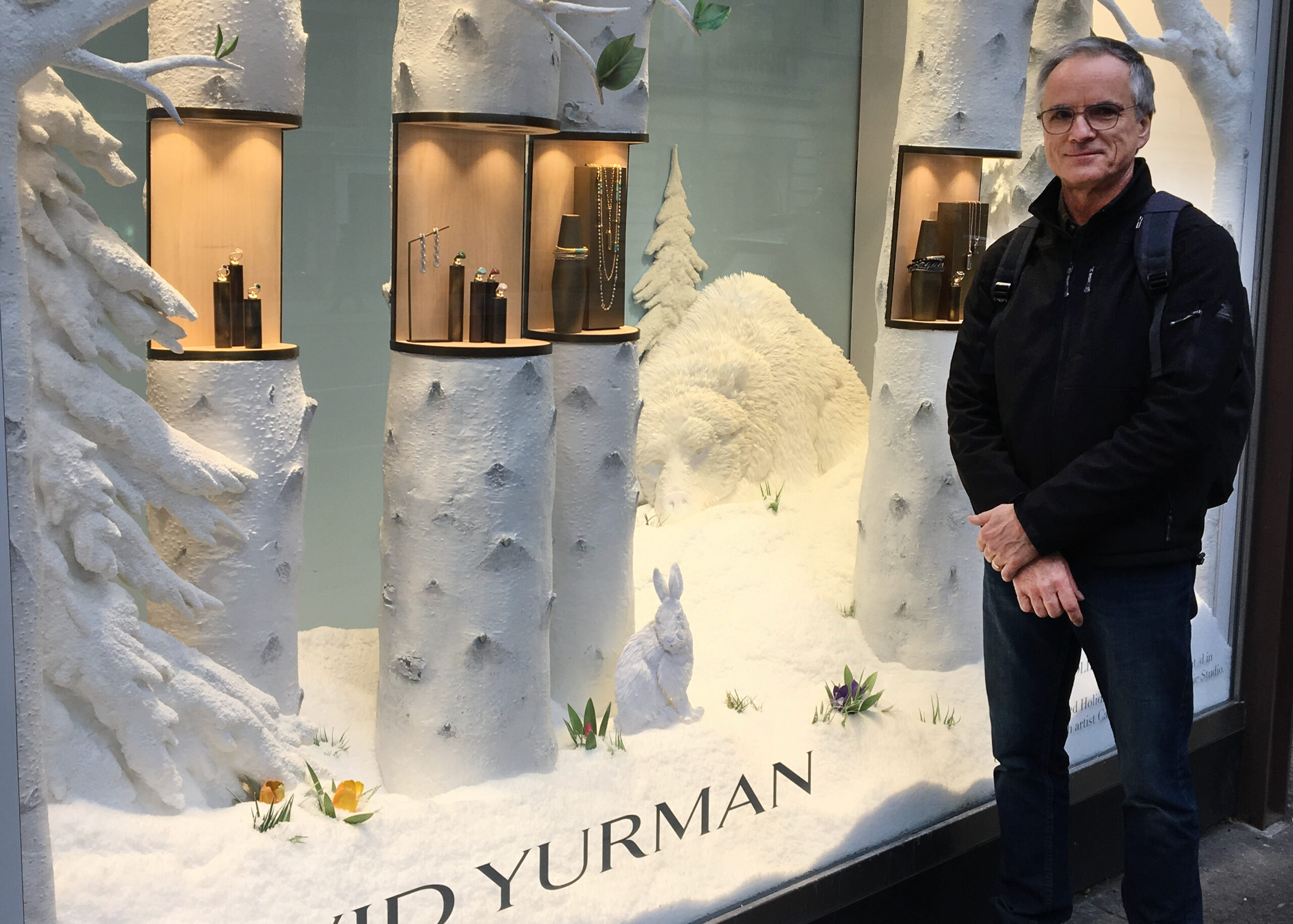
The luxury jeweler David Yurman invited him to create a holiday installation for its Manhattan windows: An Enchanted Holiday. The project called for eighteen paper sculptures—owls, wolves, bears, rabbits—set within a winter tableau designed to captivate passersby during the busiest season of the year.
The timeline was unforgiving.
- animal sculptures in 7 weeks.
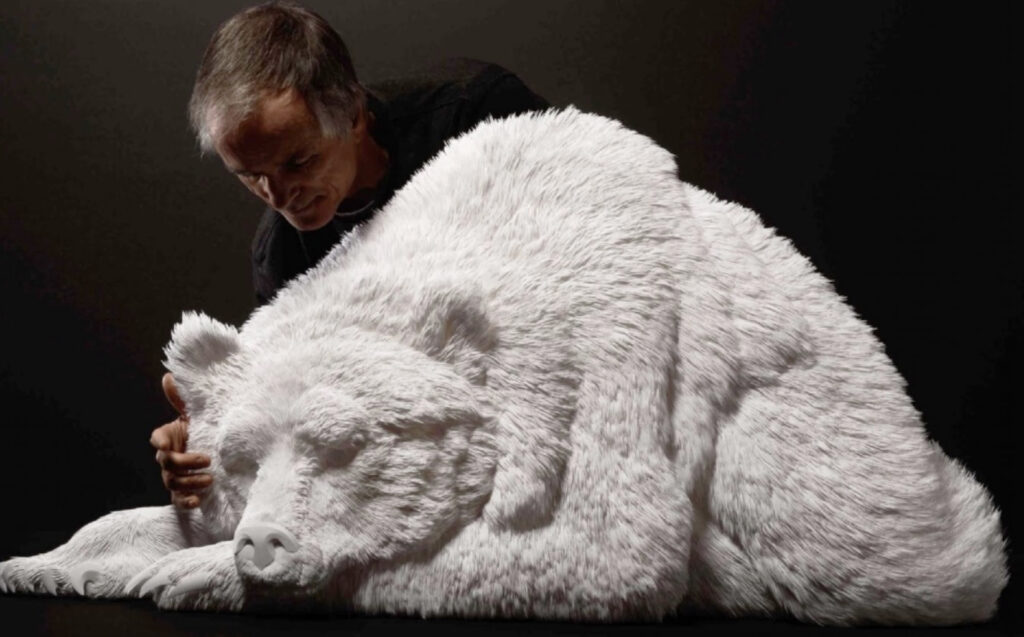
Nicholls worked relentlessly to create snowy owls, hibernating bears, rabbits, wolves and foxes, structuring every moment, often creating multiple sculptures simultaneously to maintain efficiency.
“I used every second,” he says.
The result was nothing short of magical.
By night, the windows glowed with sculptural light. By day, thousands passed, pausing—if only for a moment—to witness something unexpectedly stunning.
To feel something.
And when asked how the jewelry brand had discovered Nicholls, the answer came with a hint of mystery.
“Maybe it was Instagram… or maybe… a fancy magazine.”
There is a quiet symmetry—almost a sense of inevitability—in Nicholls illustrating The True Ugly Duckling.
A boy who once cut paper to make sense of the world is now reimagined through the work of an artist who has devoted his life to that same medium.
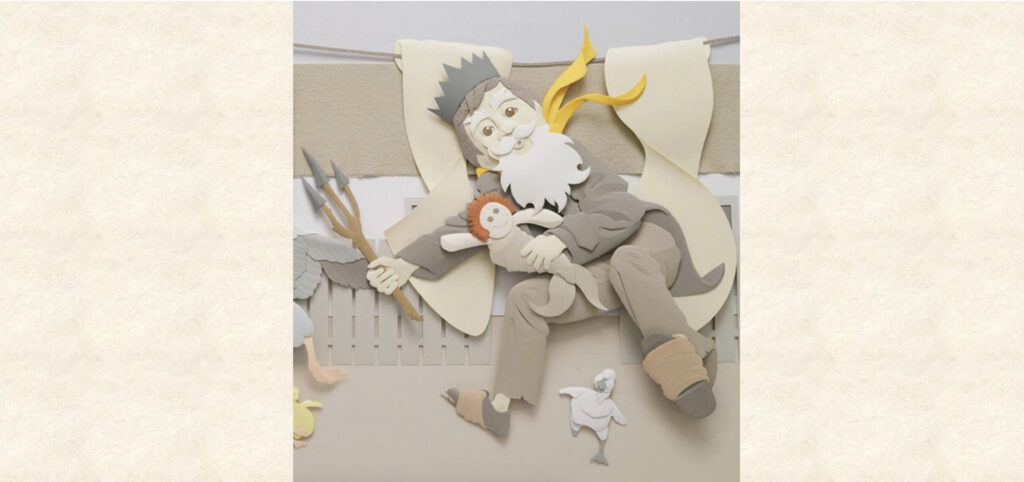
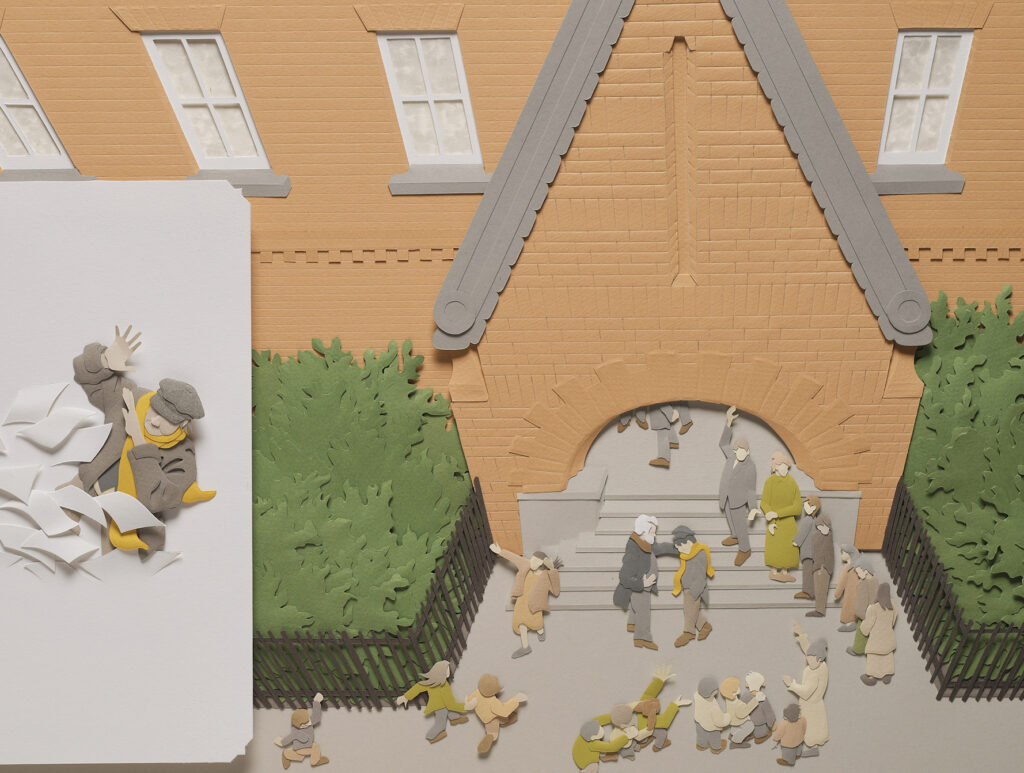
Nicholls approached Andersen’s story with reverence, determined to honor not only the narrative, but the man behind it. He incorporated subtle motifs—such as a yellow strip of fabric carried by the young Andersen—to create continuity and emotional resonance across the book.
He also sought to acknowledge Andersen’s own paper artistry, carefully balancing homage with his own distinct style.
The result is not merely illustration.
It is interpretation.
It is conversation across centuries.
In the end, The True Ugly Duckling is not just a story about Hans Christian Andersen.
It is about the quiet certainty that what makes us different may, in time, become what defines us.
Through the extraordinary vision of Calvin Nicholls, that transformation takes shape in the most unexpected of materials.
Paper.
Simple. Silent. Waiting.
Until, in the right hands, it becomes something unforgettable.
The swan was always there.
Just waiting for the light.
WHERE TO FIND “THE TRUE UGLY DUCKLING” STORYBOOK & CALVIN NICKEL HYPRE-REAL PAPER WILDLIFE SCULPTURES:
- The True Ugly Duckling – How Hans Christian Andersen Became a Swan storybook written by Sandra Nickel and illustrated by Calvin Nicholls is available at most bookstores, Target, Amazon and at www.SandraNickel.com
- Fine art paper wildlife sculptures by Calvin Nicholls are available at https://calvinnicholls.com